To learn
Story of Levi – how to turn downsides to advantages?
I heard this story myself in 2021 from our fantastic tour guide. True or not, this story is worth telling.
A long time back, people in Kittilä (the municipality where Levi is located) were thinking about the downsides of their home: it’s remote, it’s cold, and there’s nothing to do. The municipal decided to take these disadvantages and make them advantages.
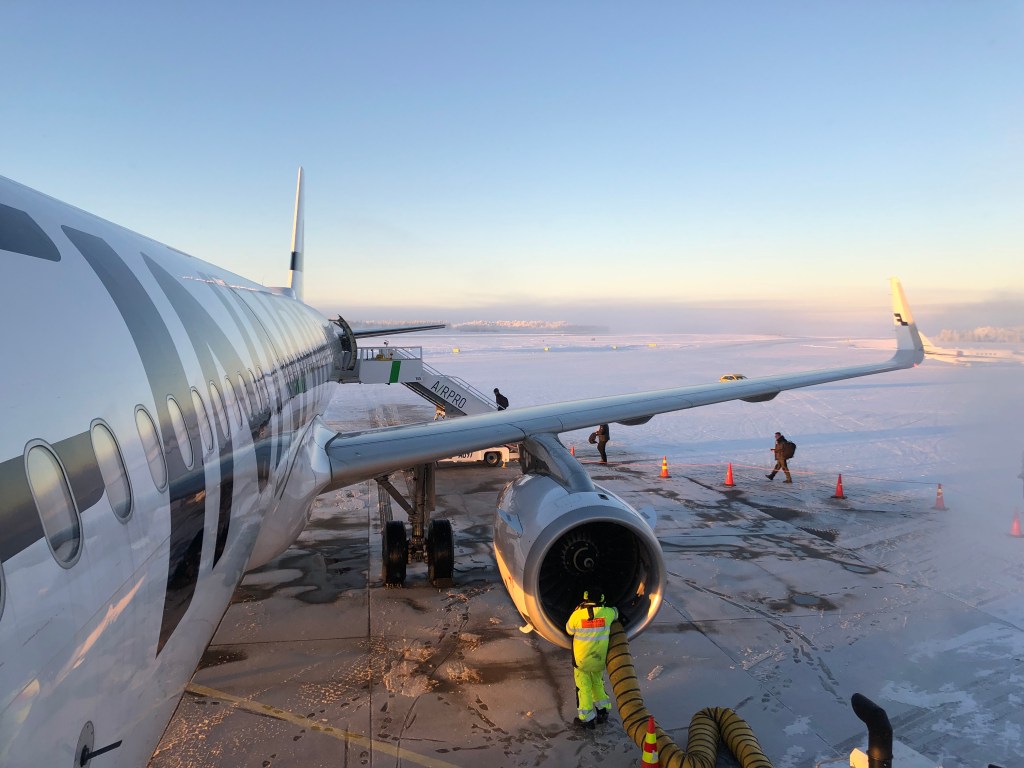
To make the place less remote, the first step was to bring the airport to Kittilä, which opened in the early 1980s. You can imagine that people in Finland thought they had lost their minds. Little did they know how popular the airport would become and how many international flights would arrive during the season.
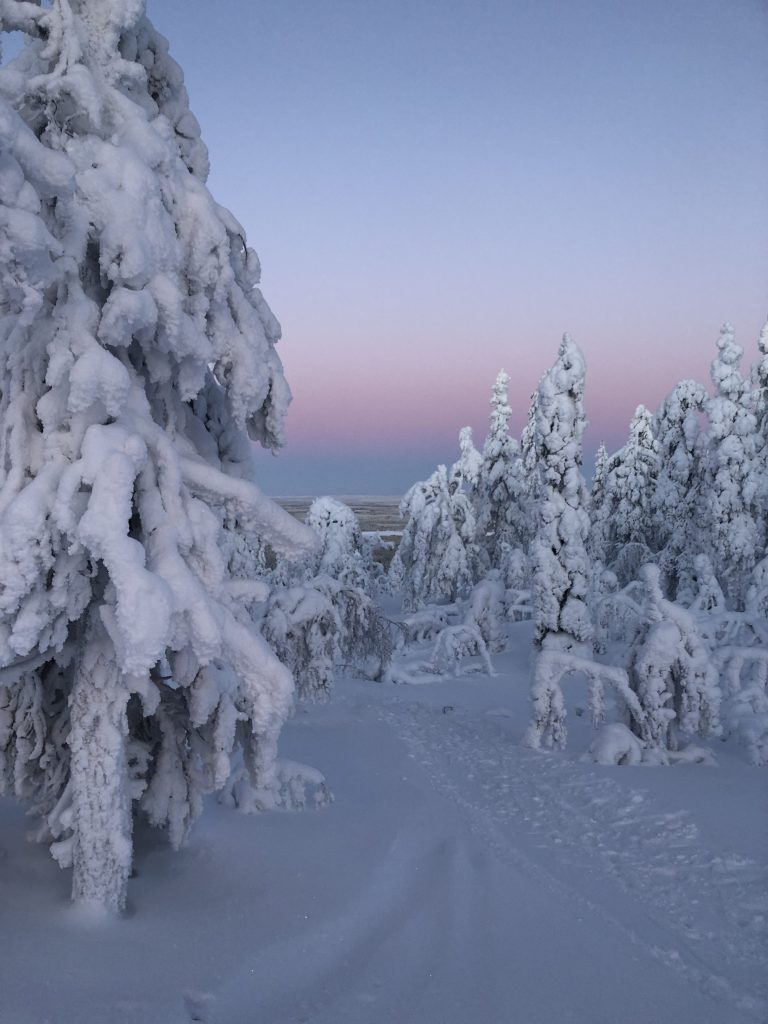
The second downside was that the place is freezing. For example, over the past 20 years, the average January temperature has been -14 degrees Celsius. But cold also means snow. While in Southern Finland, we can’t be sure whether we will have a white Christmas, in Levi, you can be sure to experience a winter wonderland. Between 1991 and 2020, the earliest first snow was on the 9th of October, and the latest was in 1987, when it fell on the 1st of November. This means that when the rest of Finland is dark and wet, Levi is already descending into white luxury. In Kittilä, it’s not just a bit on the surface; there’s plenty. Actually in 2022 April, we hit the new record of 132 cm of snow, whereas usually it is 97 cm. This means the skiing season runs from mid-October through the beginning of May. If you are not a fan of the freezing season, visit Levi in March or April.
The airport was probably the big thing, making it possible for tourists to reach this fantastic destination in Finnish Lapland. “Nothing to do” has turned into a “Finnish Las Vegas”. You name it, we’ve got it. Levi is one of the very few places worldwide where you can be in the middle of nowhere during the day but come back in the evening for dinner at a fancy restaurant. Obviously, the traditional things such as husky rides, snowmobiles, reindeer safaris, northern light safaris, skiing, snowboarding, snowshoeing, ice swimming, skating and so on can be found in Levi. But besides these, you can spend your day in a spa, go bowling, to the gym, or do yoga – again, what you can imagine, it most likely exists in Levi.

What is “rakka”?
The address of Levi Log Cabin is Viprakka 4A. Around this area, you can see many other roads named after rakka: the road leading to Viprakka is called Rakkavaarantie, and you can see several other names such as Eturakka, Länsirakka, Piirakka (eng. pie), Kelorakka, Kivirakka, Metsärakka, Vähärakka, Kalliorakka, etc. But what does this word, rakka, actually mean?
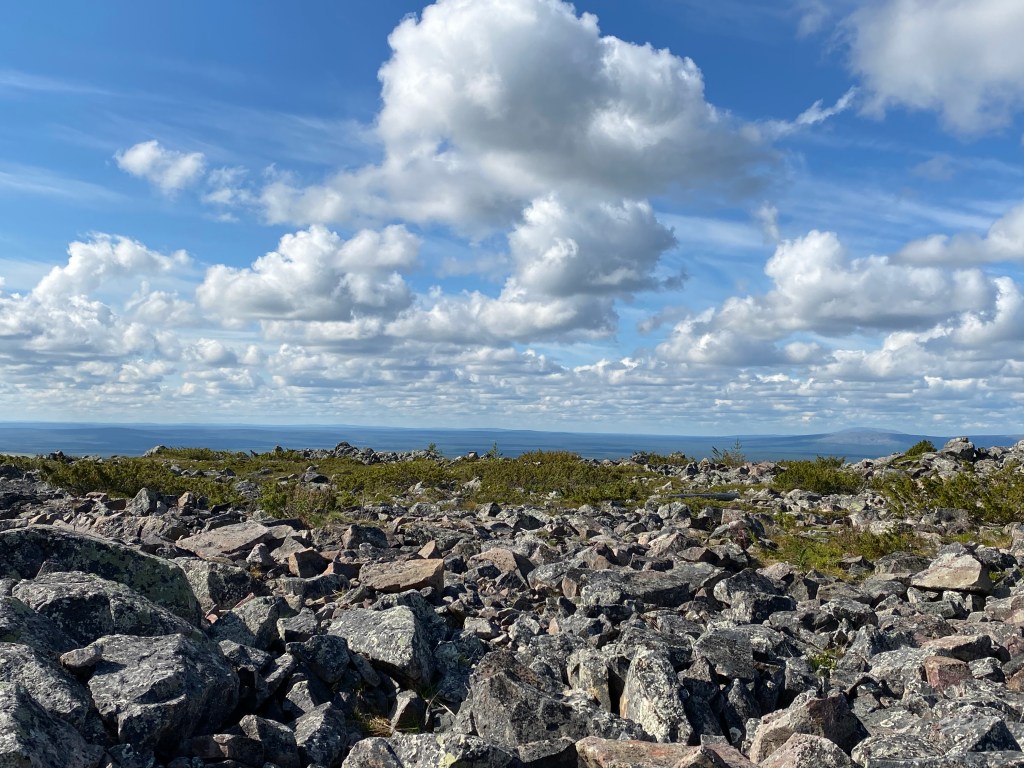
If you travel to Lapland during summer or autumn, you notice that many of the hills are covered with blockfields. These blockfields formed through several cycles of freezing and melting over thousands of years. Thus, rakka is a typical character of cold, arctic zones. You can find other kinds of blockfields in Finland too, one of them is “Field of the Devil”, pirunpelto. However, the field of the devil used to be a beach, so its birth is different from rakka.
Viprakka, unlike the road across Piirakka (eng. pie), doesn’t actually mean anything. You are welcome to play with the address and feel like a VIP staying at Levi Log Cabin. This way of addressing might be easier to remember, especially during the small hours.

Easy to breathe
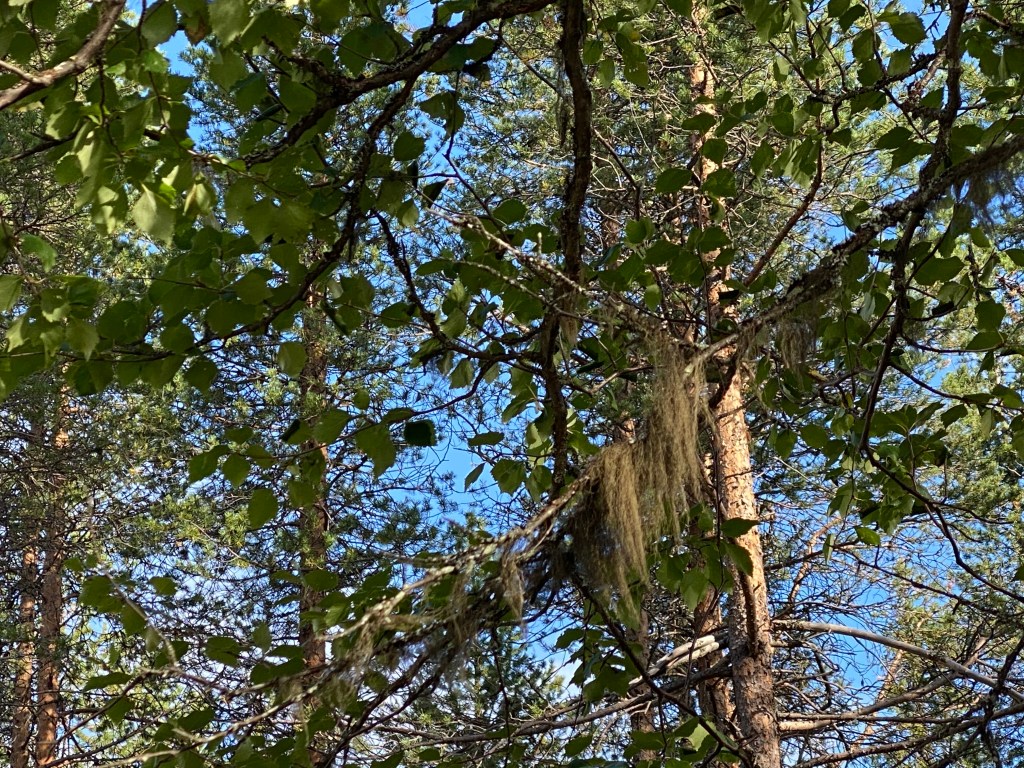
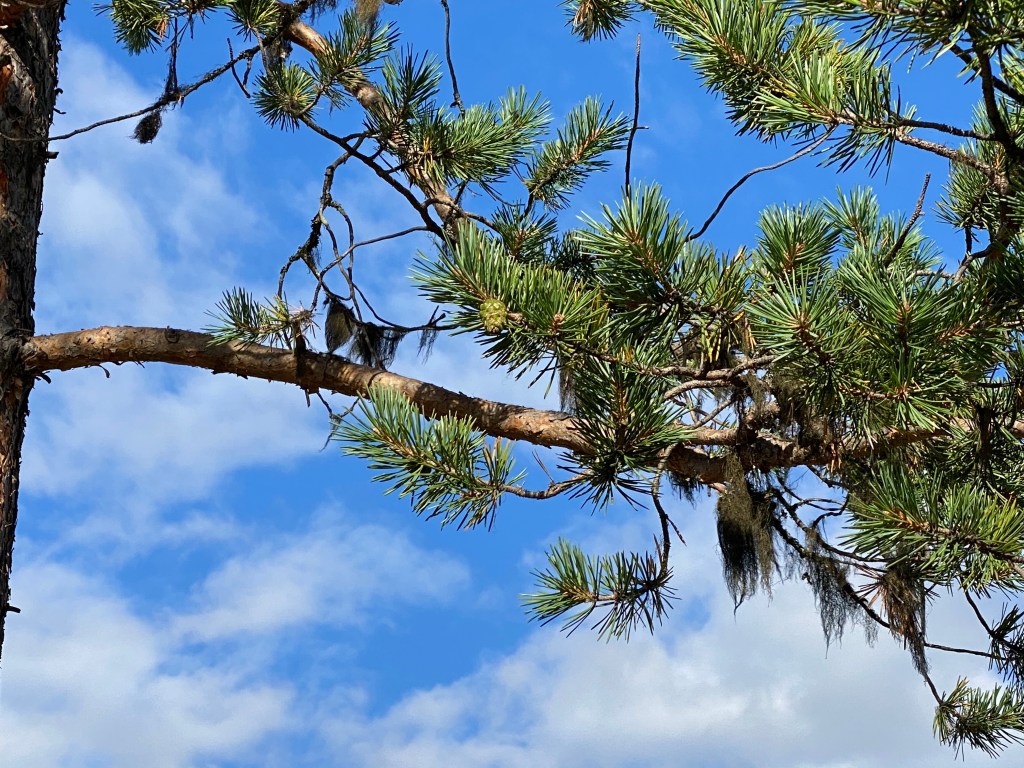
Did you know that we have one of the air quality indicators right outside of our cabin? Just take a look of the “beard” in pine trees and spruces, they are called lichens. Lichens are exquisitely sensitive to air pollution, particularly sulfur dioxide, making their presence on tree branches a trusted indicator of pristine air quality. In clean air environments, lichens can grow 10–20 centimetres long, whereas in polluted regions they shrivel to just a few millimetres or disappear entirely—a visible testament to the purity surrounding you. Lapland, and especially Finnish Lapland’s fell region, ranks among Finland’s cleanest air zones: scientific studies confirm that Muonio and the Pallas area offer some of the world’s purest air. The Pallas-Sodankylä GAW station has been measuring atmospheric composition since 1991 and has participated in significant European and global air quality research programs. Lapland’s pristine air stands in striking contrast to industrialised regions, where factories and traffic have historically decimated lichen populations. Today, Lapland’s clean air has become a growing tourism asset, as research by the WHO shows that clean air can significantly extend life expectancy.

 Welcome to Levi Log Cabin!